
The circle of life
A misty morning spreads through the horizon. Loud whistling sea-breeze, swashing waves, the soft, soggy sands, and, the quirky sea stack formation on the beach, makes this remote landscape serene. An eerie calm veils this part of the nature. Darkness here awakes to the luminous blue waves. Lashing the shore, this glistening wave, is a welcoming signal into the blue depth, to those who call it their home.
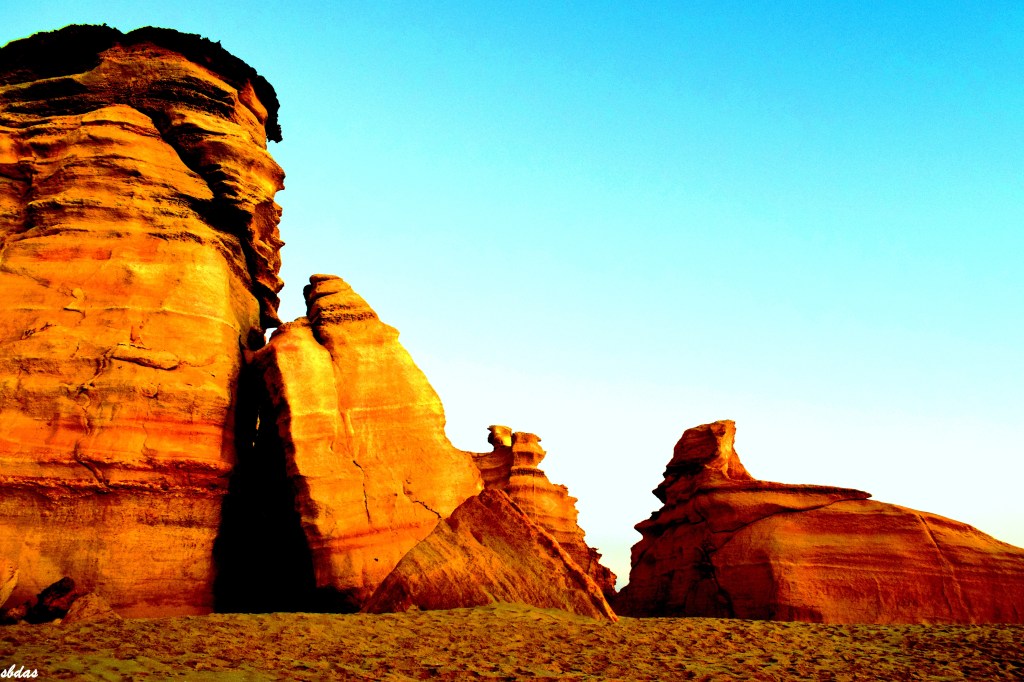

Just before the crack of dawn, a group of 12 tourists stood ready to stamp their feet on the powdery sands of a vast flat beach, snugged between bizarre rocky cliffs, kissing the ocean bed. The sea breeze and the sandy path made us wobble. It isn’t frosty in Ras Al Jinz, yet the wind feels sharp, making us all hold on to our hoodies a little tighter. It’s pitch dark. Shooting stars in the sky flares as Zeus’s thunderbolt. This dark side of earth face those million twinkles veiling the space. Amidst this blackness, an experienced turtle ranger’s faint torch light perfectly guides the path through the lap of mother-nature.
We’re slowly approaching the incredible three kilometer stretch of pure undisturbed nature. This sanctuary is the best-kept secret of the gentle giants – the Green sea turtles.
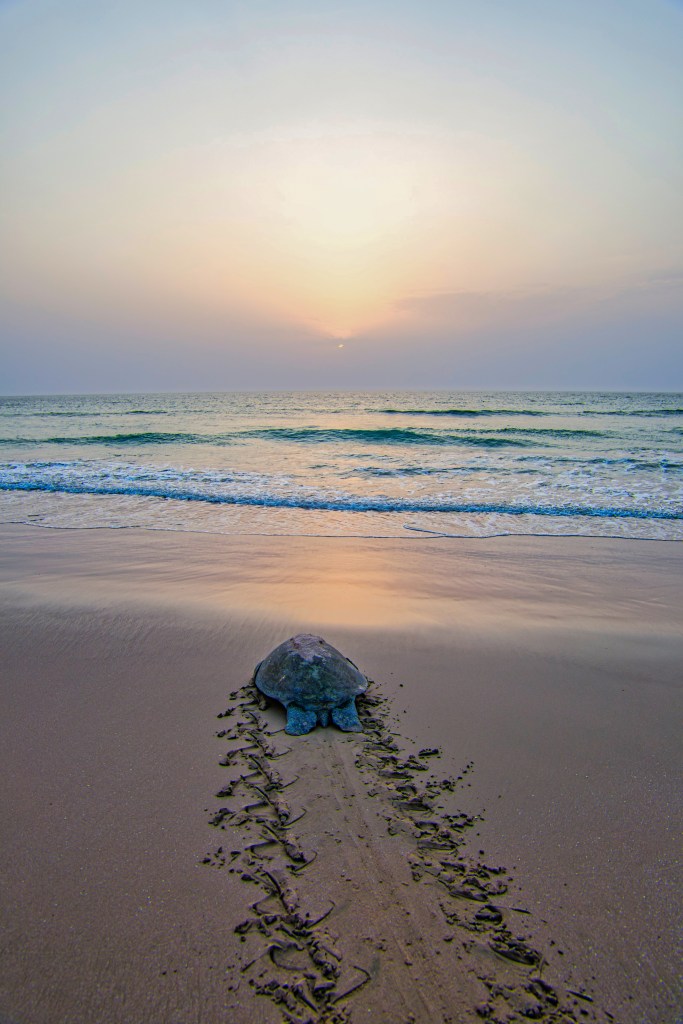
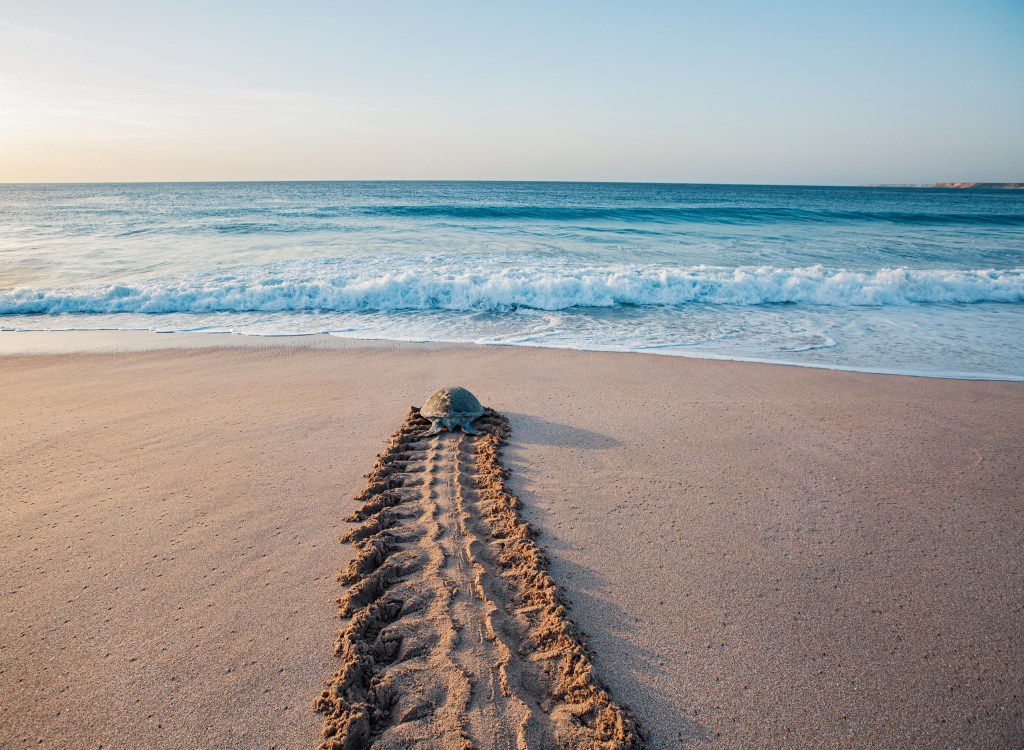
This exotic nesting site is adored by these endangered chelonian species. Paddling slowly and steadily, from far across the Indian Ocean, these sturdy reptiles reach this significant shoreline of Oman, with just one mission – Continue the Cycle of Life – every single night.
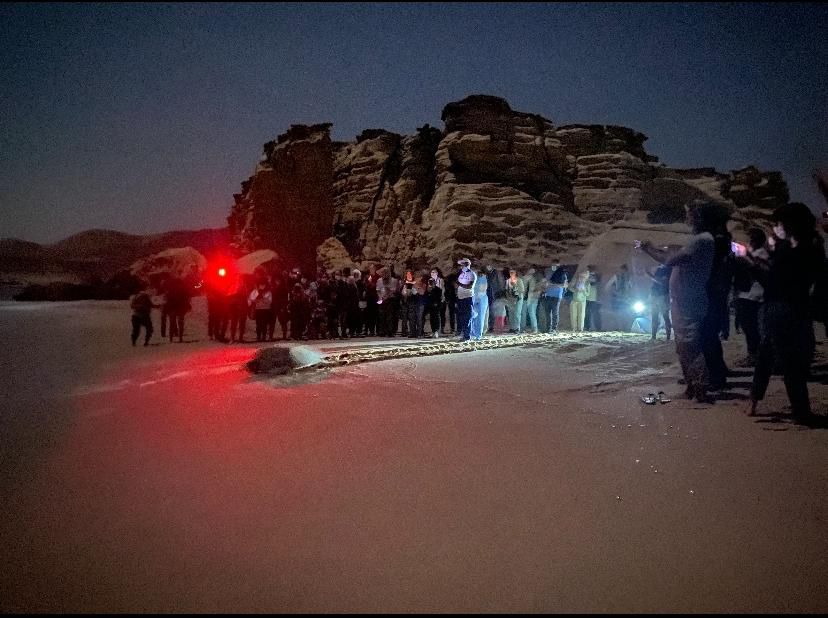
It’s 9.30 pm. Dark, windy and wild. “I want all to pay attention and keep your calm. Please do not talk or flash your mobile lights around. We don’t want to harass the nature and its creatures here. Stay together or you may lose your way in the dark,” a strict advice came from the Eco-Guide/Ranger Nasser Al Zadjali, at Ras Al Jinz, Turtle Reserve.
After few minutes of walking, we came to a halt, forming a circle with children at the frontline. Standing in the middle of the circle, Nasser hold a thin branch of a small shrub. He softly marks a circle with the stick. Digging few dot with his fingertip, he theoretically explains the entire process, of the mother turtle coming to the shore, searching the right spot to dig a pit, laying the eggs, and finally, how her hatchlings makes it back to the sea. We learn that, in order to fool the predators, the wise old mommy turtles take up the pain to dig false pits. As he describes, he readily welcomes question from his tourists for further clarification.
With this theory, we gear up to encounter the nature’s biggest miracle. Now the hunt begins. The ranger was busy signaling another ranger on the other side of the beach with his torch, to know the exact location, where a giant green mommy turtle was busy nesting. A signal came to our guide from afar, and, we were told that one green turtle just started laying her eggs and the other making her U-turn to the sea after safely covering her nest.
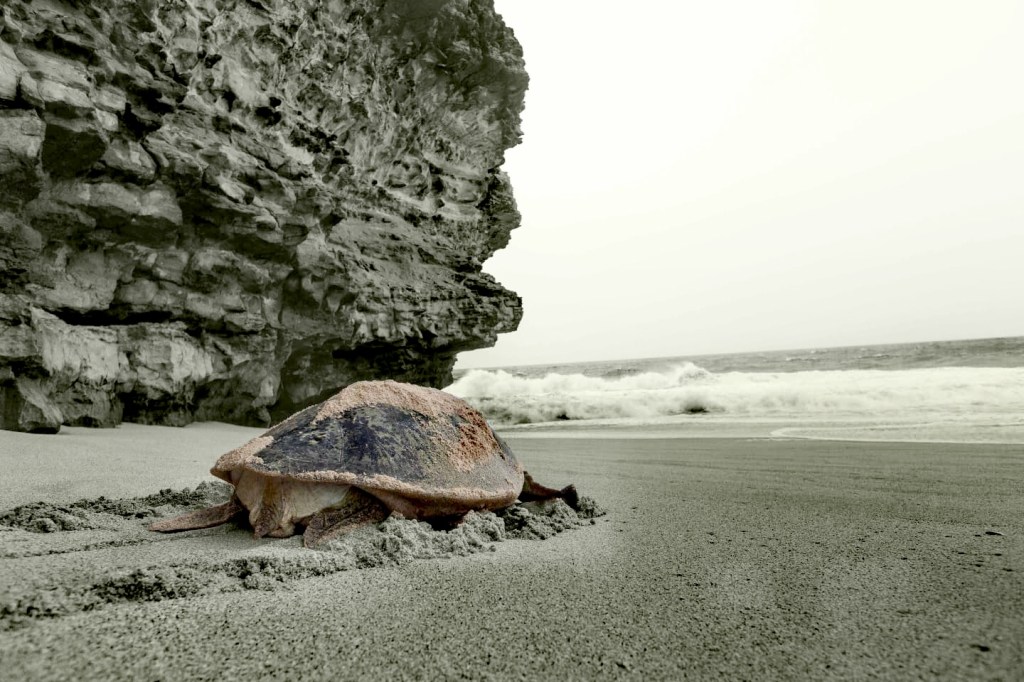
With our feet sinking ankle deep in the soft sand, we hastily dragged through behind our ranger. The infra-red torch light showed us something remarkable. The turtles have their presence marked everywhere along the shoreline – their flipper-prints, the false nests, the abandoned pits, and even the empty hatched egg-shells. All vouch their proximity. Their flippers stress through the sand creating a trail on a definite line to and fro the sea. In just few minutes the mystery unfolds. There she was! Her hard shell snuggles ninety percent of her soft body within. The back flipper digs a perfect pit for her offspring. Now it’s time to go into labour. Her flippers grabs the sand. Positioning herself with the pit at her base, she prolapses her cloaca, dropping clutches of 100-125 eggs one after another for several minutes. Behold there! We are watching the wonder of Mother Nature without a pretense.
The female digs the sand to check the right nesting conditions. If the soil is not soggy enough, she returns to the sea without laying eggs. In a day or two she returns back to check if the moisture of the sand is seamless. In an adverse situation her eggs are wasted in the water without a future.
“After 50 to 63 days of incubation, these eggs will hatch, and, the new life on Earth will see its light,” Nasser threw his infer-red torch light at the eggs. Saying this, he guided us to several intriguing spots. “Watch your steps, there are false pits around, you may trip. Even the hatchling might be fighting hard to make their way to the sea.”
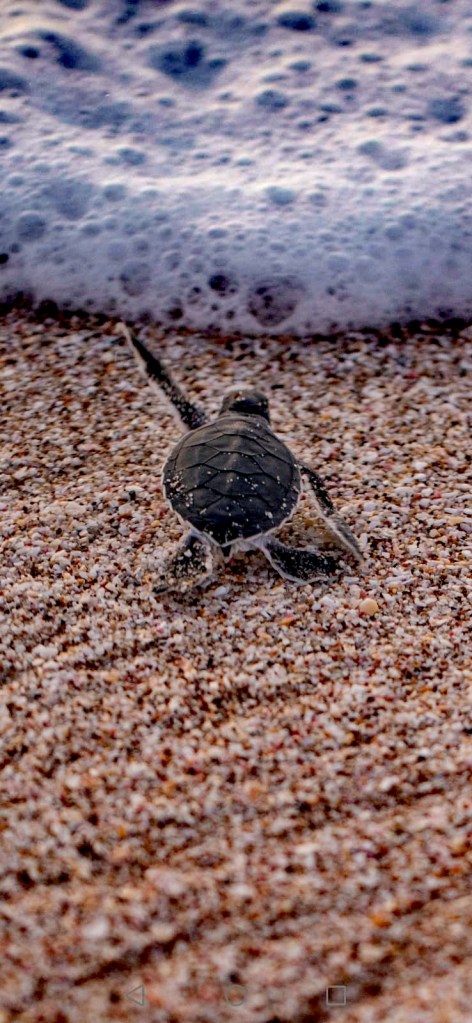
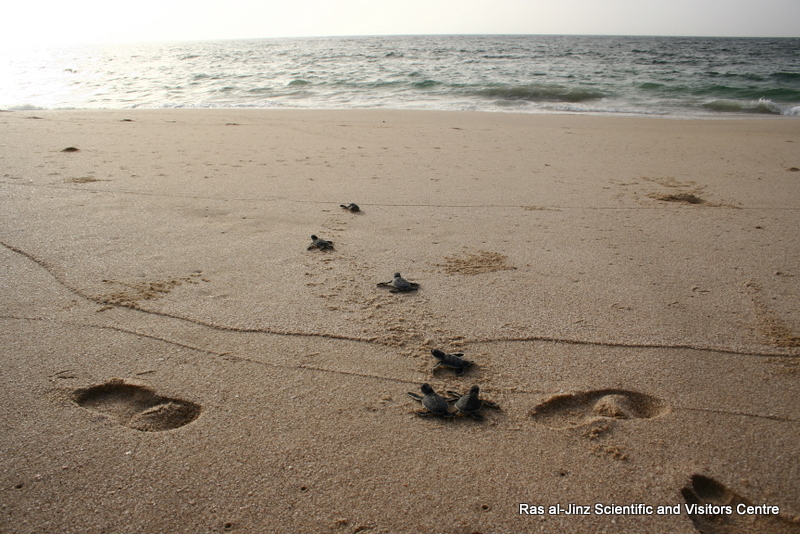
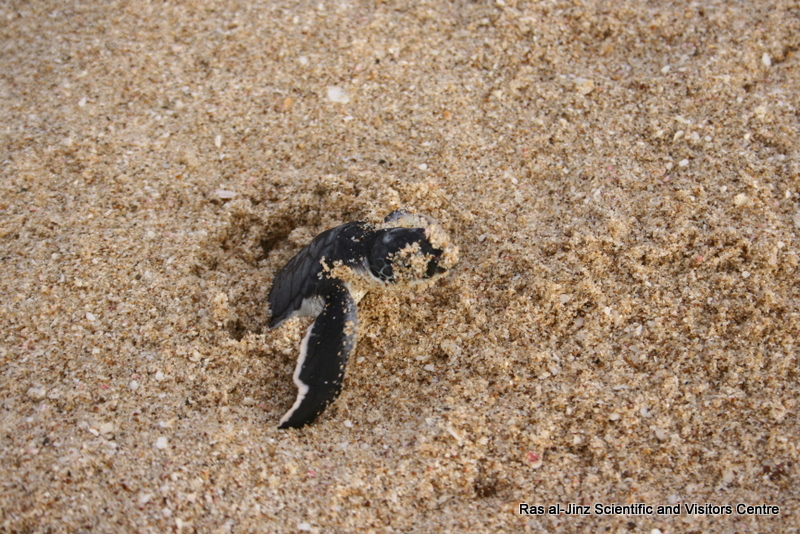
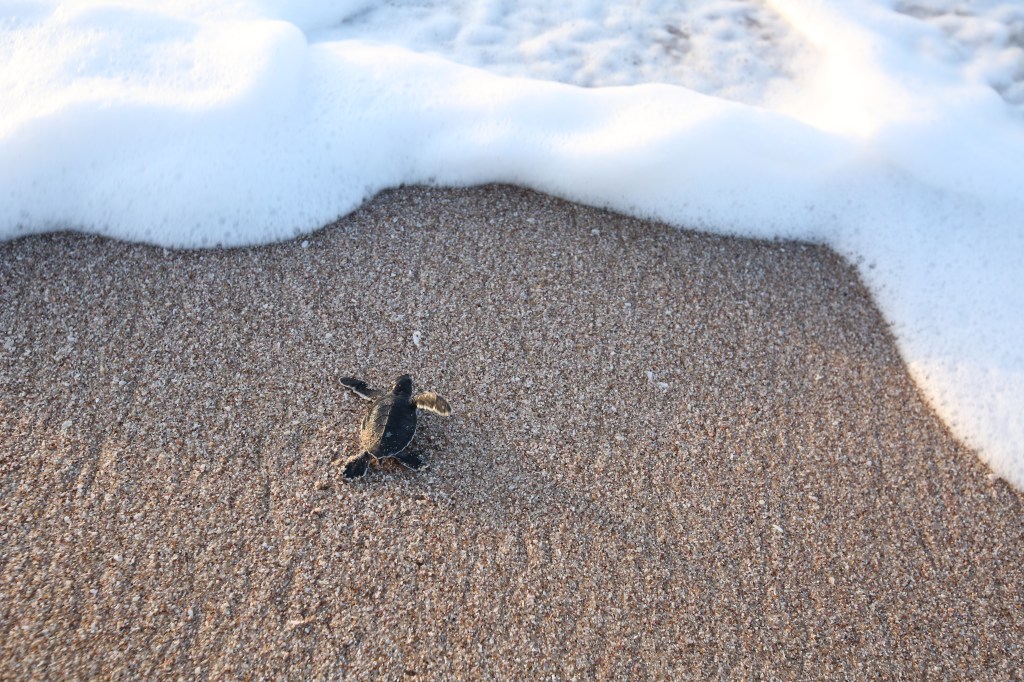
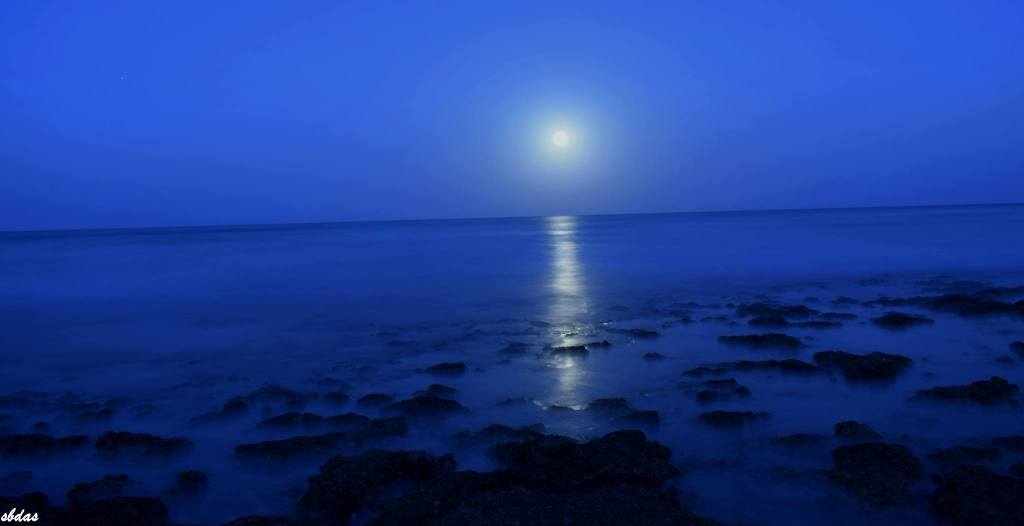
I suddenly noticed the electric blue waves hitting the shore. It’s due to presence of bioluminescent phytoplankton. This fluorescent light, made the horizon clear for the inch and a half long one day old hatchlings. Their destination appears clear. “They follow the horizon light, these glowing waves guide them home.”
Many out of the hundred hatchlings, become late night snacks and breakfast to foxes, seagulls and the ghost crabs. Only few survive the cruelty of world around.
“The moist sand, the sun and right temperature, together makes this part of Oman perfect for Green Sea Turtle nesting throughout the year,” ranger Nasser, added with a friendly smile.
These marine reptiles choose her nesting spot depending on the quality of the sand. This spot can either be near to the sea, or a bit further from the beach.

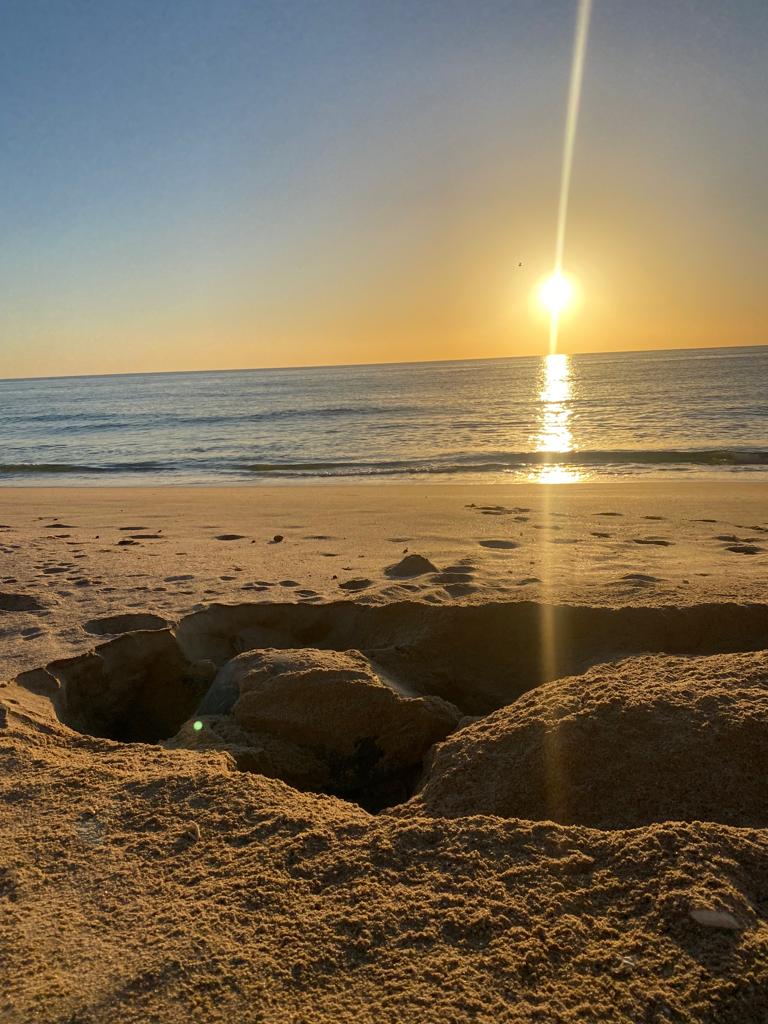
Nasser Al Ghilani, the Reserve Manager, was briefed by the marine biologists on an interesting fact, which he gladly shared with me. He was told, that, eggs laid by the turtles nearer to the sea produces male turtle and that further from the sea reproduces females.
The mother turtles’ choice of the nesting spot, determines the sex of her babies. The distance from the sea and warmth of the sand helps in the process. That’s an amazing element to learn. Thank you, Nasser for enlightening me!
At the break of the dawn, as the orange radiance of the sun, touches the water in the far-eastern part of this Gulf Peninsula, nature is still busy in its action. After a struggle of three long hours, she conceal her eggs deep down under the layer of heavy sand. Now it’s time to head back until the next time.
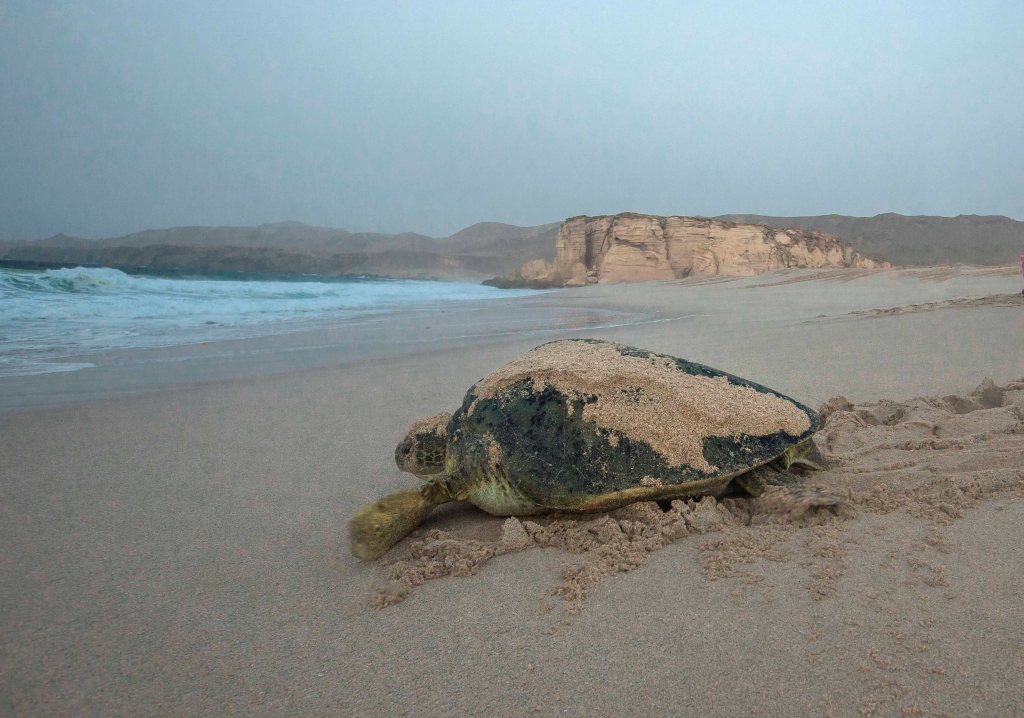
The mother-child bond ends here. Yet, this thick layer of sand on her carapace, lay an evidence of the hour long intense labour, which she underwent.
The babies hatch and surface the sand on their own. They slowly creep towards the sea, fighting all odds, buckling up for their “lost years” (from hatchlings to adulthood). The female of the lot, will forever remember the sand, where she’s born. She shall return back to breed on this shore on maturity. It’s her Home.
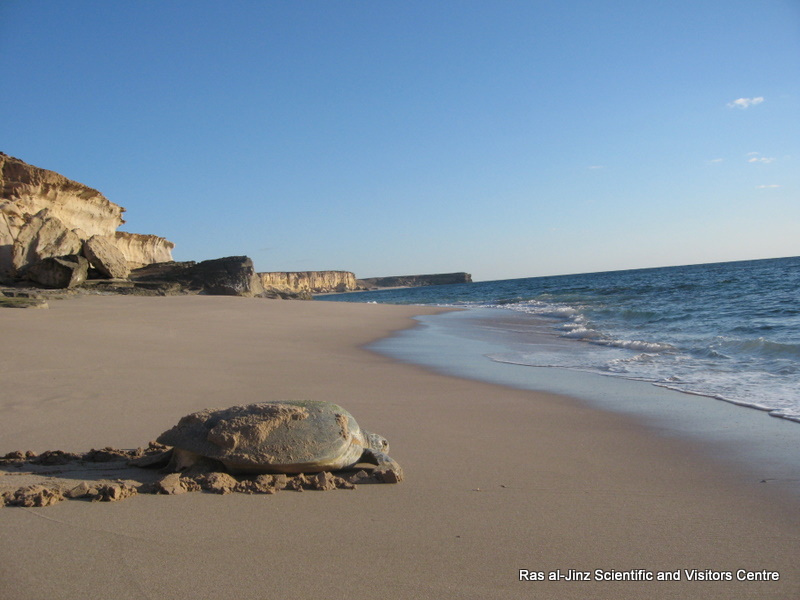
As the day cheers the sea and the sky, we see a couple of turtles floating on the shallow water near the shoreline. We’re witnessing an ardent love-making. While female returns to nest on maturity, male waits offshore to caress his beloved. “They never forget the coast where they’re born. They will continue this cycle until their death,” Nasser defined in simple words. It’s indeed the return of the native! And the cycle of life continues.
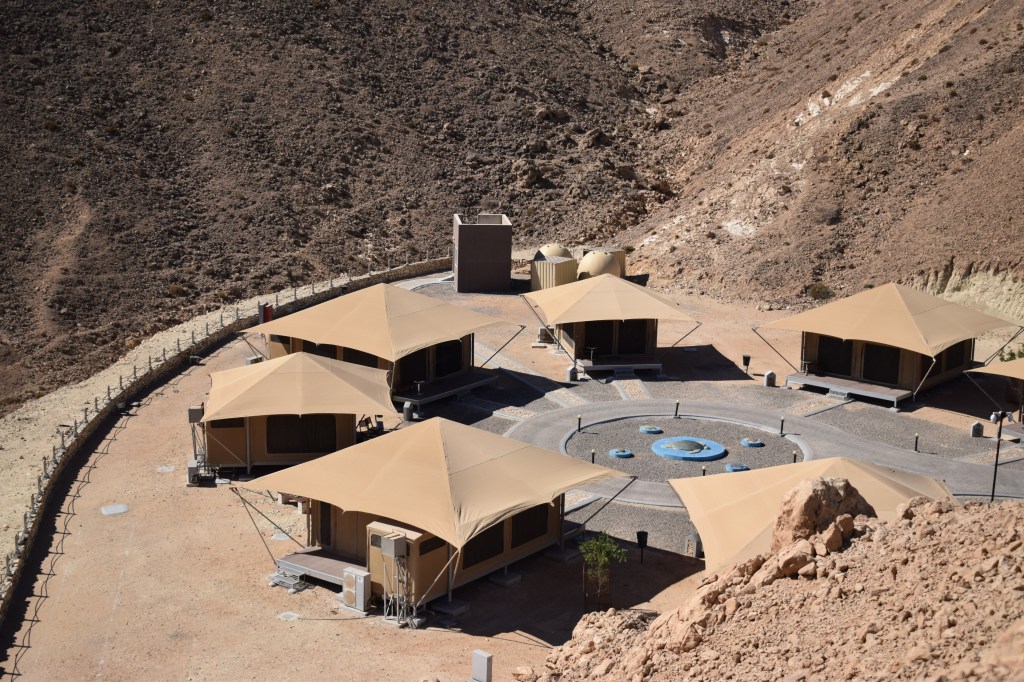
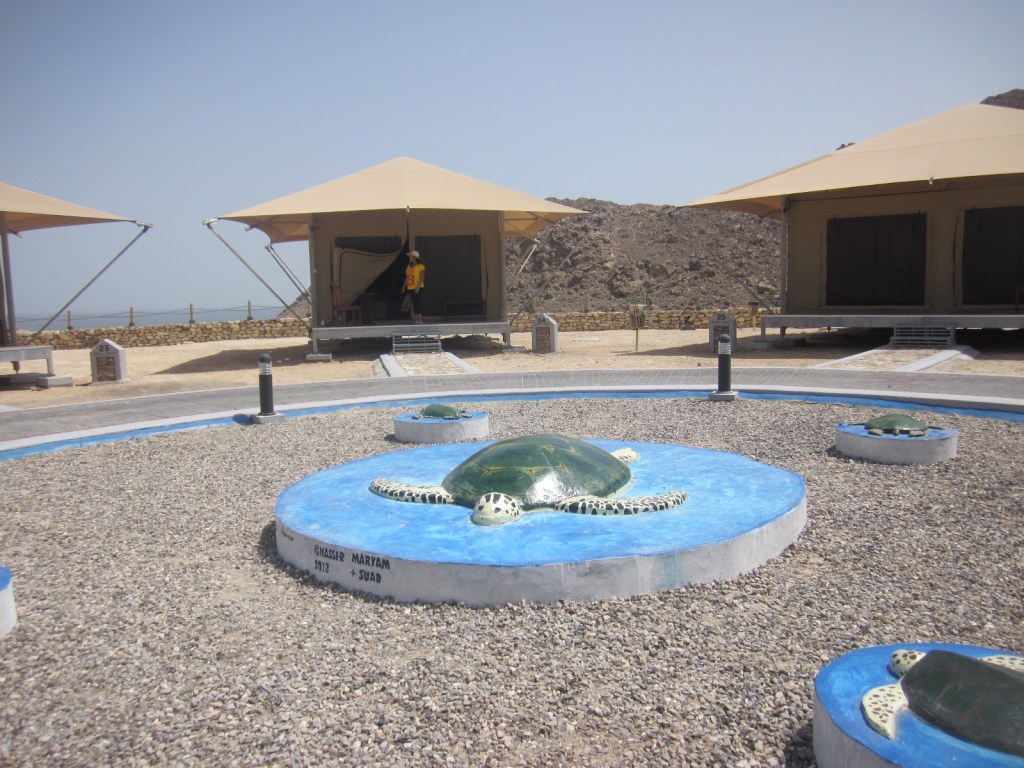
Where to stay?
An overnight stay at the Eco-tents in Ras Al Jinz is sure to make you feel one with nature.
When to visit?
Green sea turtles nest throughout the year. Monsoon is considered to be the peak season. Rain and monsoon fog makes a perfect environment for nesting. In July and August, nearly 80 turtles throng the beach. June to September is high season, and almost 40 turtles could be spotted. The lean season has a minimum of 5 to 20 nesting per night.

“The beauty of Oman has pushed me to work at Ras Al Jinz. I am a very environmental friendly person who love and enjoy his work everyday. Talking of turtles? They release my stress.“
“Do you know? Ras (meaning ‘cape’ in Arabic) Al Jinz is labelled as the land of the rising sun in Arabian Peninsula. A jewel in the crown, this easternmost tip in Ash Sharqiyah governorate of Oman is much beyond being just a destination. A 42-kilometres long coastline running from Ras Al Hadd to Asilah, display an array of natural wonders, archaeological sites and nature-human relation. Opened in 2008, this nature’s reserve has been shortlisted as one amongst the World Heritage Sites. Nearly 60,000 visitors from all over the world visited the sanctuary last year.”
Nasser Mohammad Hamad Al Ghilani, Reserve Manager, Ras Al Jinz

Content is Subject to Copyright
Copyrights Reserved Swati Basu Das

 One AMONG MANY
Leave a comment